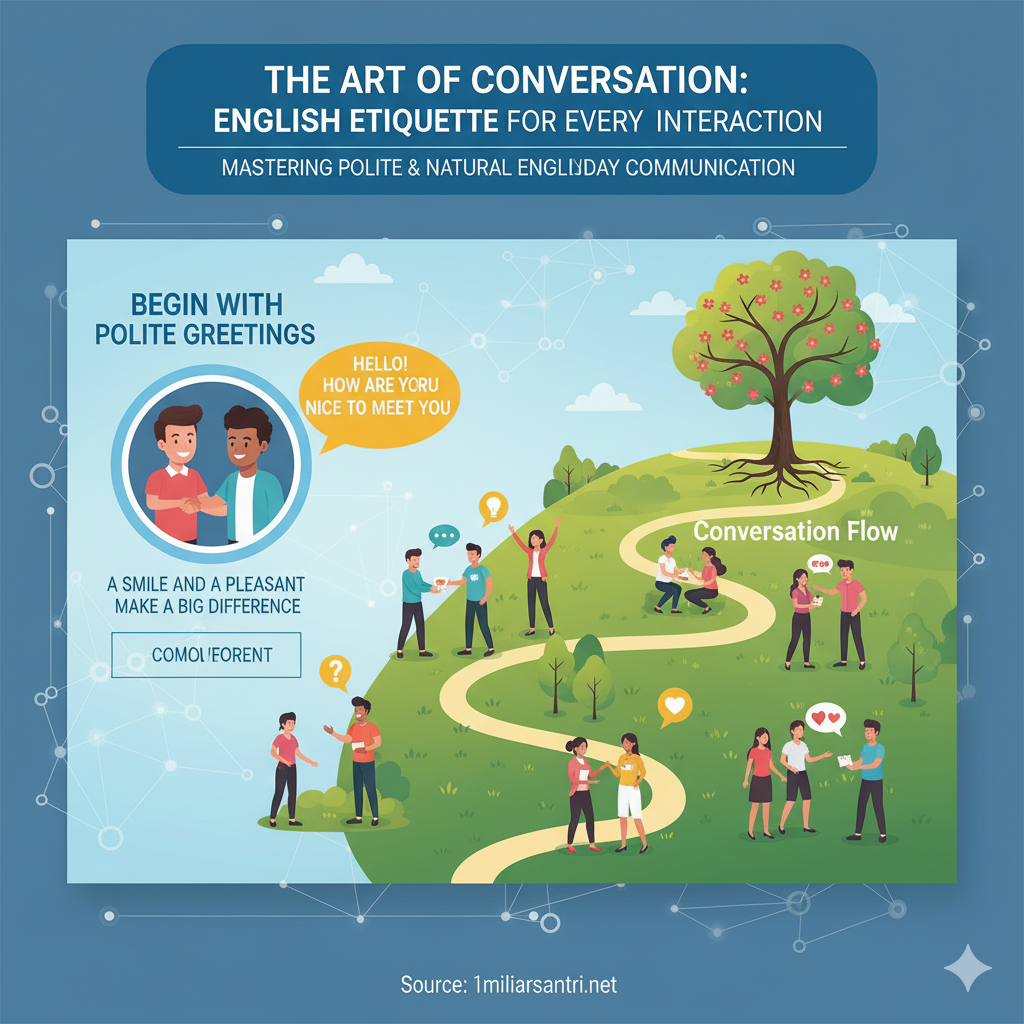



How to Speak English Politely — The Adab Way

A: “Assalamu’alaikum! Hello, how are you today?”
B: “Wa’alaikumussalam! I’m well, thank you. And you?”
Here, the speaker bridges spiritual greeting with everyday English—a fusion that embodies identity and respect.
Dialogue 2: Permission and Space
A: (Knocks lightly) “Excuse me, may I enter, please?”
B: “Certainly—please come in.”
Knocking, asking, waiting—these small acts preserve dignity and privacy. They are illustrative of modesty and caring for boundaries.
Dialogue 3: Thanks and Response
A: “Thank you so much for your help.”
B: “Alhamdulillah, I’m happy to assist.”
This shows how gratitude to Allah and to people can go hand in hand—reinforcing sincerity in both.
How to Practise Adab in Everyday Speech
Moving beyond examples, consistent practice is what turns polite expressions into habits. Here are ways to nurture that:
- Renew your intention daily. Let every polite phrase you use be an act of worship, aiming to express character not just words.
- Build thematic vocabulary. Pair words like humility, respect, mercy with their meanings in Islam—this gives you tools to express adab naturally.
- Join communities that care about manners. Being around people who gently correct and encourage polite speech helps much more than practising alone.
- Reflect after interactions. Notice: was your tone soft enough? Did you wait to speak, or dominate? Did your words carry kindness? Using a journal or notes helps.
A Fresh Perspective: Beyond Politeness to Presence
While polite phrases are valuable, ultimate adab goes deeper: to the presence you carry. Your tone, your sincerity, your listening are all parts of speaking politely. When you speak English with authenticity, humility, and genuine respect—not just the words—you embody adab in a way that draws people closer, not pushes them away.
Conclusion
English is more than a language—it can be a canvas for adab. When we integrate Islamic manners into every greeting, request, apology, and word of thanks, we elevate what we say into something meaningful. Let us not be satisfied with speaking fluently; let us aim to speak beautifully. May Allah guide our tongues to what pleases Him, and make every utterance a reflection of our character and faith.
“O Allah, beautify our words with adab and use our tongues in what pleases You.”
Witer: Glancy Verona
Editor: Abdullah al-Mustofa
Ilustrasi By AI
Eksplorasi konten lain dari 1miliarsantri.net
Berlangganan untuk dapatkan pos terbaru lewat email.