



Speak English with Elegance: Mastering Polite Conversations with Purpose
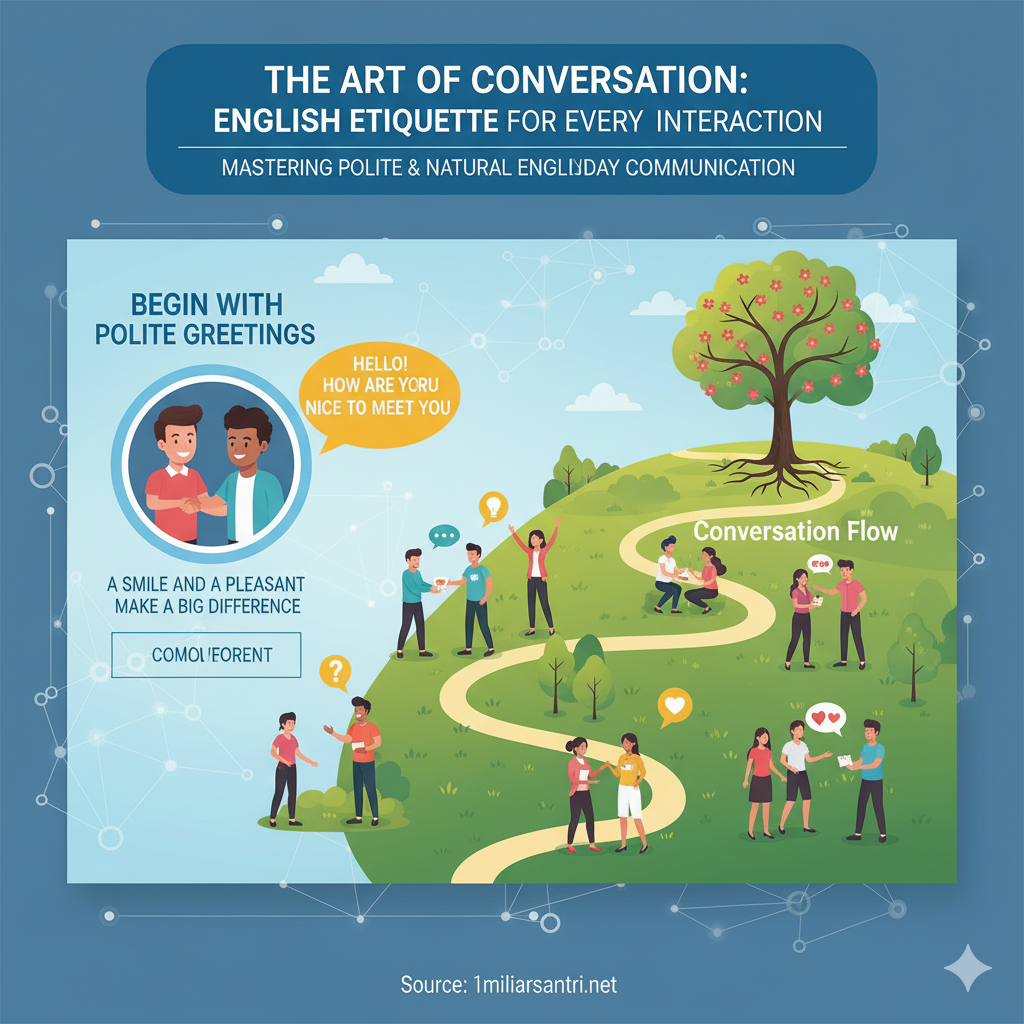
Bondowoso – 1miliarsantri.net: Mastering a language is more than memorising grammar rules or expanding vocabulary. True fluency blossoms when we learn how to communicate kindly, naturally, and respectfully. In English-speaking cultures, conversation is almost an art form—one that shows not only what we know, but who we are. In this article, we’ll explore essential English-conversation etiquette so that even beginners can interact with confidence and courtesy in everyday life.
Begin with a Warm Greeting
Every meaningful conversation starts with a friendly opening. Simple phrases like “Hello,” “Hi,” or “Good morning” help set a positive tone. A polite greeting reveals openness and respect for the other person—which is especially valued in English-speaking contexts.
You might follow with:
- “How are you?”
- “How is your day going?”
- “Nice to meet you.”
Add a genuine smile and pleasant tone—because first impressions carry weight, especially when speaking English.
Practice Active Listening
Speaking well is only half of communication; the other half is listening. Active listening means giving your full attention to someone without interrupting. Gestures such as nodding, maintaining eye contact, and saying:
- “I see.”
- “That’s interesting.”
- “Really?”
…show you are engaged. Avoid distractions like checking your phone or looking around. By listening attentively you show empathy and respect, which helps your conversation become meaningful rather than superficial.
Read more: Speak with Grace: Islamic Etiquette in Every English Conversation
Use the “Magic Words”: Please, Thank You, and Sorry
Politeness is the foundation of good English communication. There are three simple words that carry big impact: please, thank you, and sorry.
For example:
- “Could you help me, please?”
- “Thank you for your time.”
- “Sorry, I didn’t catch that.”
These words soften your tone and show you value the other person. In English-speaking cultures, these expressions are common not only in formal situations but in everyday talk.
Avoid Sensitive or Controversial Topics
In many casual English conversations, it’s wise to steer clear of topics that can make others uncomfortable—such as politics, religion, money, or deeply personal issues. Instead, focus on light, neutral subjects like the weather, hobbies, movies, and travel.
Eksplorasi konten lain dari 1miliarsantri.net
Berlangganan untuk dapatkan pos terbaru lewat email.