

How to Speak English Politely — The Adab Way

Bondowoso – 1miliarsantri.net : In Islam, our Prophet ﷺ said: “The best among you are those with the best manners.” Politeness is more than cultural window dressing; it is a universal sign of one’s character. Because English is widely spoken and often considered the global language, it becomes a powerful medium through which we can project Islamic adab—when used with intention, respect, and humility.
Politeness in English Meets Islamic Adab

To begin with, one might wonder: what does being polite in English look like, and how does that overlap with Islamic etiquette? In everyday communication, English politeness often comes in softeners—phrases like please, thank you, excuse me—that cushion requests or show gratitude. Islamic adab likewise upholds similar virtues: honoring others, expressing gratitude to Allah and human beings, and preserving dignity in speech. By recognizing these parallels, Muslim learners can integrate polite English expressions in ways that are natural, authentic, and rooted in faith.
As we shift from understanding to action, considering specific expressions helps us make the abstract concrete.
Key Expressions and Their Adab Alignment
Let’s explore some typical situations where English politeness intersects with Islamic manners—and see how a subtle change in phrasing can carry deeper meaning.
Greetings
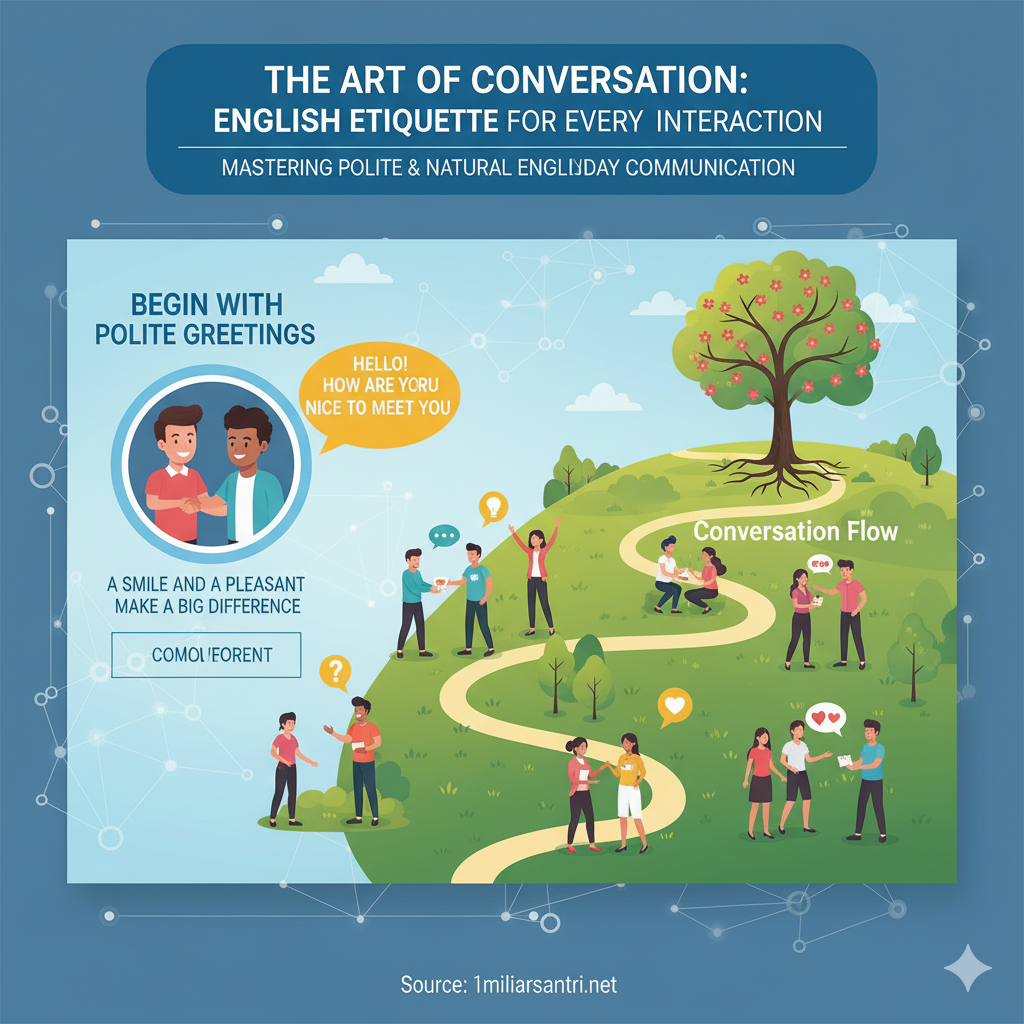
When saying “Hello, how are you today?”, starting with Assalamu’alaikum adds more than a religious greeting—it sets a tone of mercy and peace before moving into worldly conversation. This small blend honors both culture and character.
Asking Permission
Instead of barging in or using casual speech, saying “May I come in, please?” reflects both English courtesy and Islamic etiquette (which calls for seeking permission before entering). The word please softens the approach, while the act of asking shows respect.
Expressing Gratitude
“Thank you very much for your assistance” is kinder when paired with Alhamdulillah, because it reminds that kindness eventually stems from Allah’s blessings, then is returned to the people.
Apologizing
A phrase like “I’m sorry for the oversight. Please forgive me.” shows ownership of one’s mistake. In Islam, repentance and humility are essential; apologizing in English gives us a chance to reflect those virtues.
Making Requests
“Could you please share your notes with me?” is more than a request—it beckons kindness. The phrase Could you please… reduces imposition and echoes the gentle style encouraged by prophetic teachings.
Read More: Adab First: Cultivating Character Through Language
Conversations that Reflect Adab

Putting it all together, real dialogue helps connect what we intend with what we say. Here are some short exchanges that show how transitions in language and manners can reinforce our values.
Dialogue 1: Greeting and Connection
Eksplorasi konten lain dari 1miliarsantri.net
Berlangganan untuk dapatkan pos terbaru lewat email.